Autonomous Vehicle Human-Machine Interface Design for Visually Impaired Users

-
Focus: Accessibility in autonomous vehicle HMIs
Method: Between-subjects experimental usability study
Participants: 24 participants (3 user conditions)
Objective: Evaluate how multimodal feedback affects trust and navigation confidence
-
How does multimodal (audio-visual) feedback influence trust, navigation confidence, and usability for visually impaired autonomous rideshare passengers?
-
UX Researcher
Designed experimental protocol
Conducted literature review
Ran usability testing sessions
Analyzed qualitative and quantitative data
Synthesized research insights
Peer-reviewed and published in the Proceedings of the Human Factors and Ergonomics Society Annual Meeting (HFES)
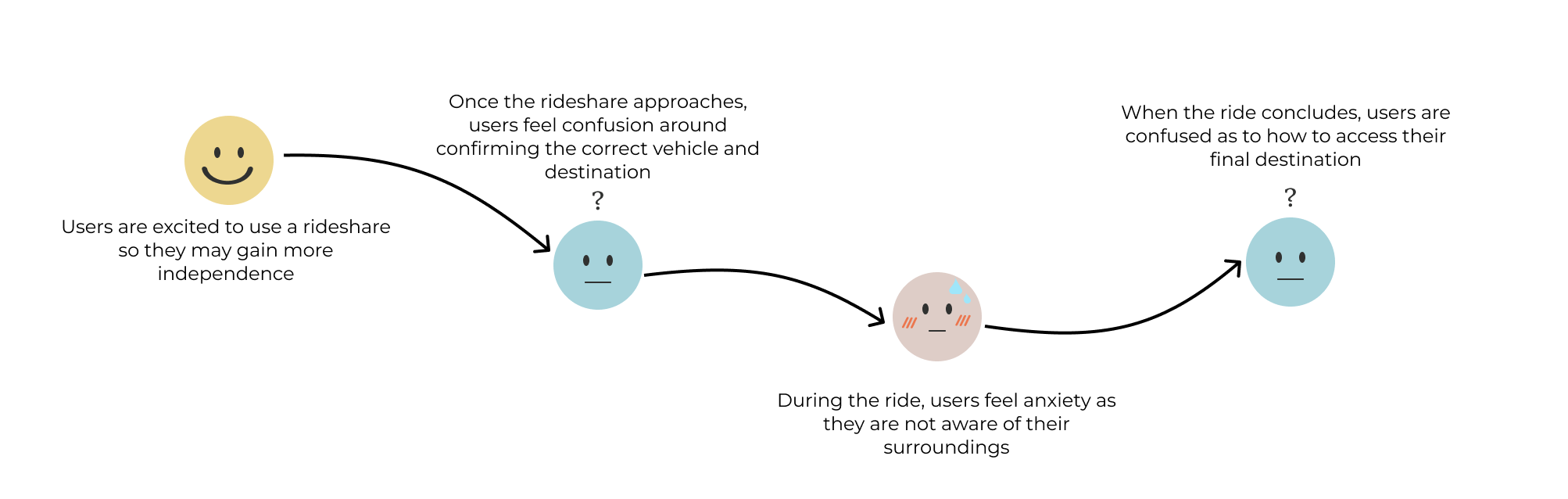
Autonomous rideshare interfaces rely heavily on visual interaction, creating accessibility barriers for visually impaired users. These barriers limit users’ ability to confidently navigate rideshare experiences and ultimately reduce the independence that autonomous transportation could provide.
Problem:
Research Question:
How does multimodal feedback influence trust, usability, and navigation confidence for visually impaired riders in autonomous rideshare systems?
-
Many visually impaired users express skepticism due to past experiences with technology that failed to account for their needs. While users were excited about the independence autonomous vehicles could provide, they worried that AV systems may not be designed inclusively and could overlook accessibility requirements.
-
Visually impaired riders often struggle to understand where they are, what the vehicle is doing, and what will happen next during a trip.
Users want:
Continuous route progress updates
Environmental cues and landmarks
Notifications when approaching destinations
-
A common challenge for visually impaired riders is confirming they are entering the correct vehicle and arriving at the correct destination.
-
Participants expressed concerns about what would happen during unexpected events, such as system failures or crashes. Since visually impaired users cannot take manual control of the vehicle, they worry about:
Accessing emergency assistance
Understanding why the vehicle is making certain decisions
Knowing when the system encounters problems
-
Many existing autonomous vehicle interfaces rely heavily on visual displays and alerts, which are ineffective for visually impaired users.
Research shows that:
Visual warnings can be easily missed
Visual interfaces do not support accessibility
Visual information alone cannot provide sufficient feedback
Key Pain Points from literature review
Design Opportunity:
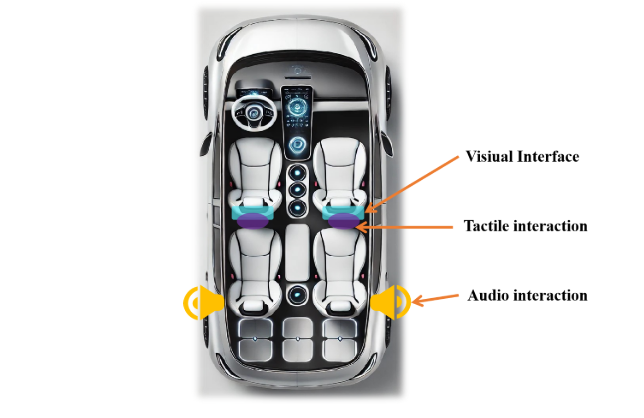
Provide audio feedback to reduce reliance on vision
Improve route transparency and trip awareness
Enable independent vehicle and destination confirmation
Offer clear emergency communication pathways
Hypothesis
H1
Visually impaired participants using multimodal feedback will report higher confidence in navigation and route awareness compared to participants without audio feedback.
H2
Visually impaired participants using multimodal feedback will demonstrate usability outcomes comparable to non-visually impaired participants.
H3
Removing audio feedback will reduce trust and situational awareness during the rideshare experience.
Prototype
-
1. Interface Set Up
-
2. Rider Verification

-
3. Destination Confirmation

-
4. Default Screen

-
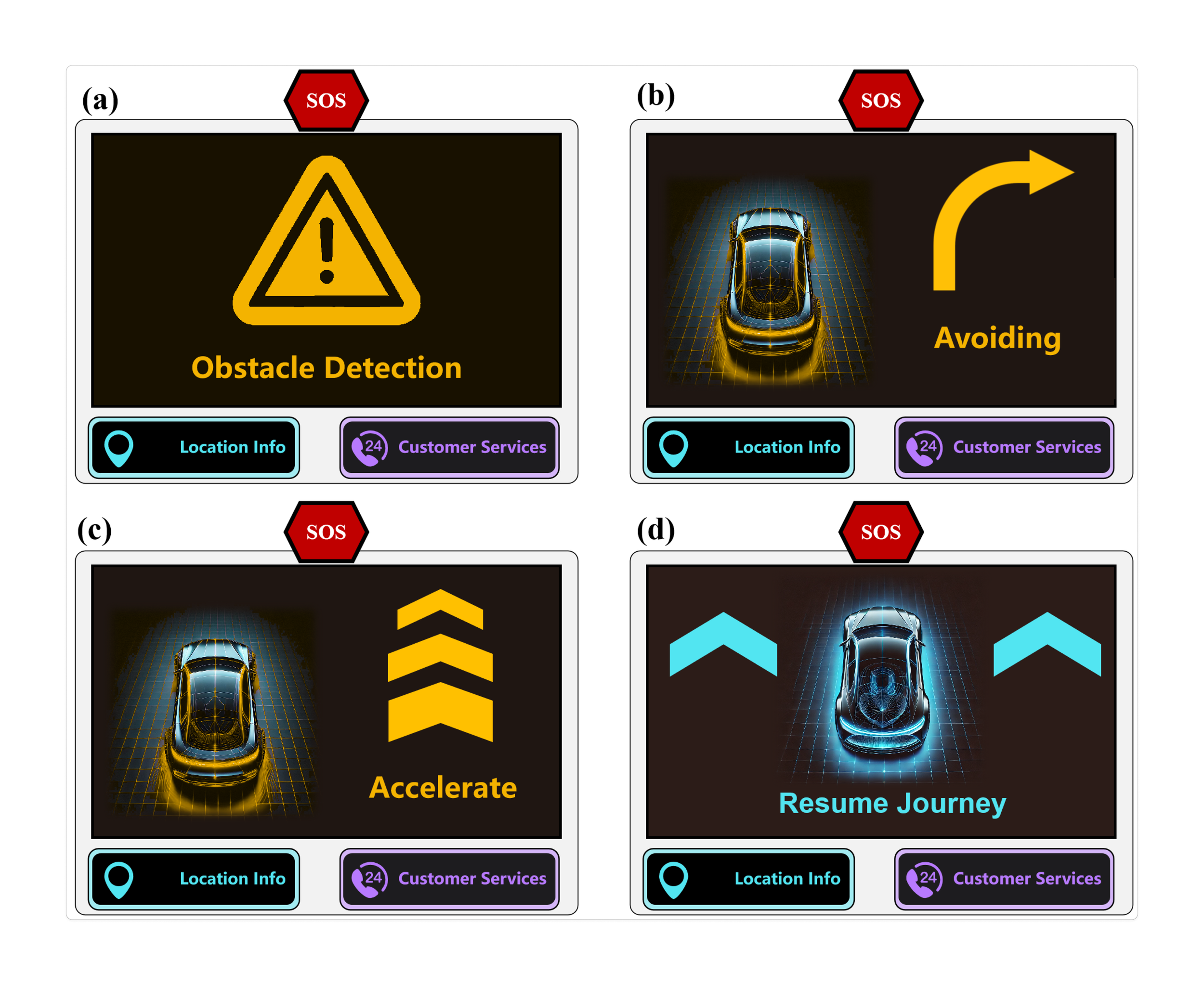
5. Event: Traffic Light

-
6. Event: Obstacle Detection & Avoidance
Testing
Between-subjects design was selected to prevent learning effects between interface conditions. 24 participants divided into three groups:
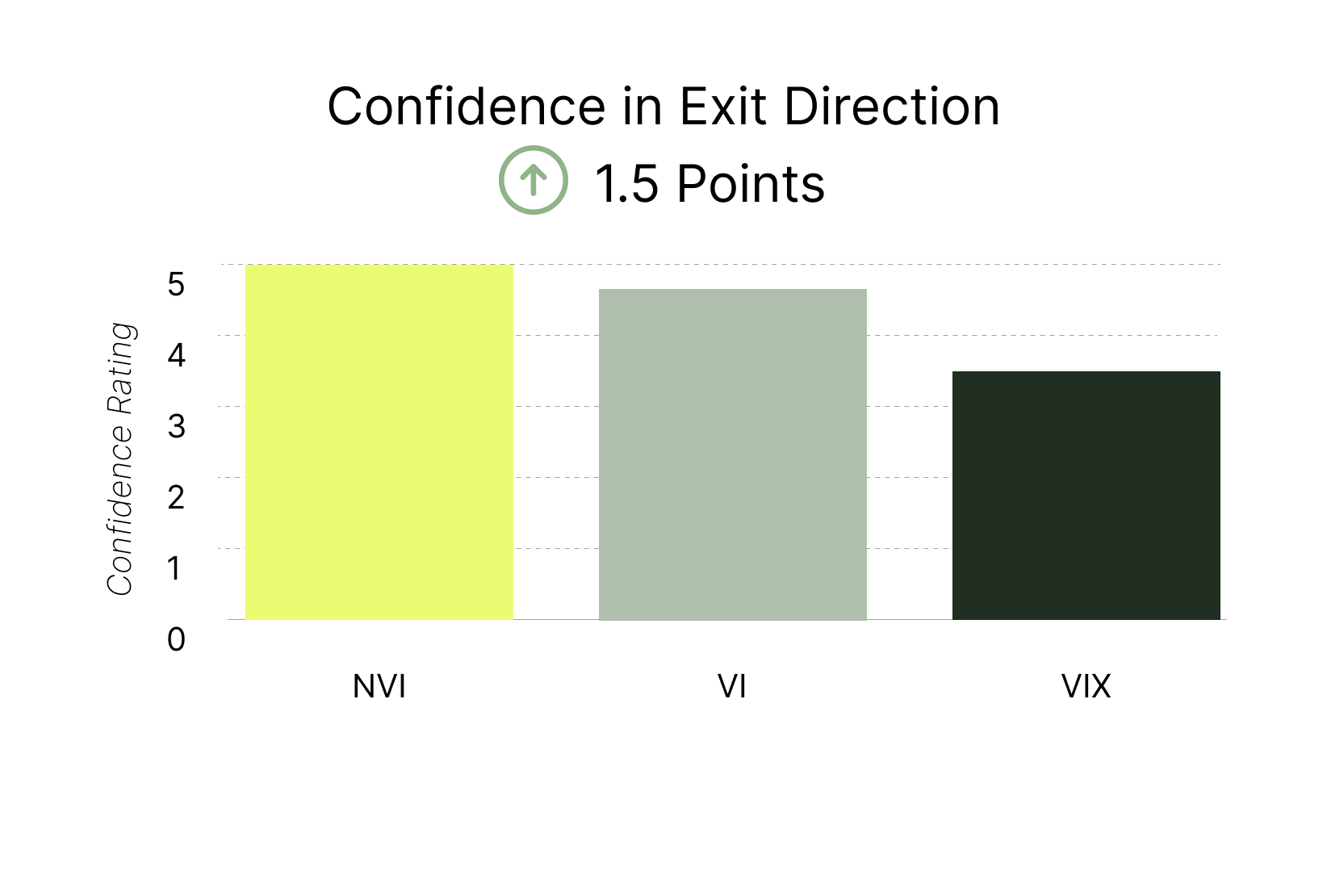
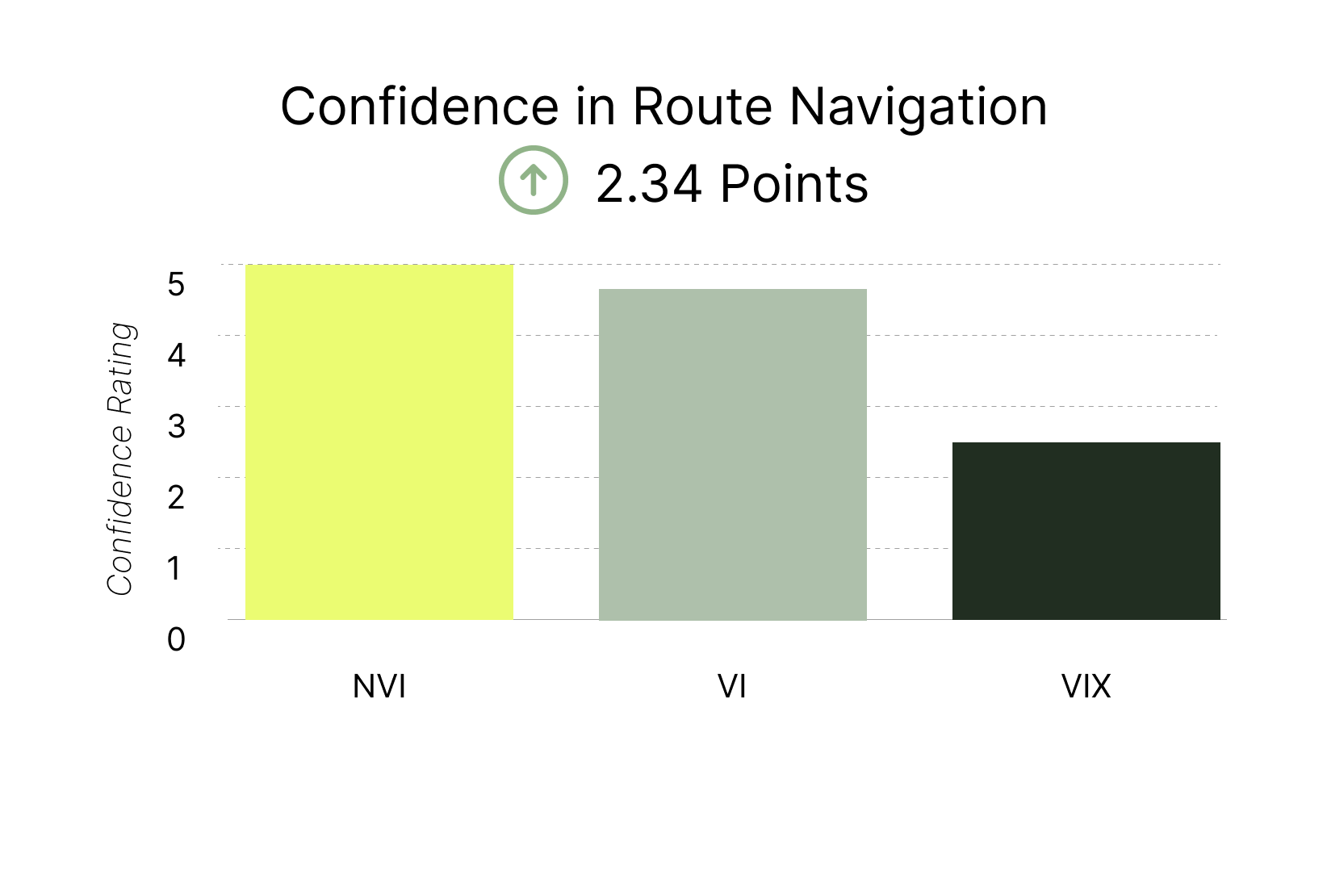
non-visually impaired (NVI)
visually impaired with audio feedback (VI),
visually impaired without audio feedback (VIX).
1
Test Design
Participants completed a 3–4 minute simulated rideshare experience using our prototype HMI
NVI: experienced the system with no visual distortion and audio cues
VI: experienced the system with visual distortion and audio cues
VIX: experienced the system with visual distortion and no audio cues
Each were asked to complete the same set of tasks:
Confirm the correct rideshare vehicle
Monitor route progression during the ride
Exit the vehicle and orient themselves
2
Testing
3
Measuring functionality
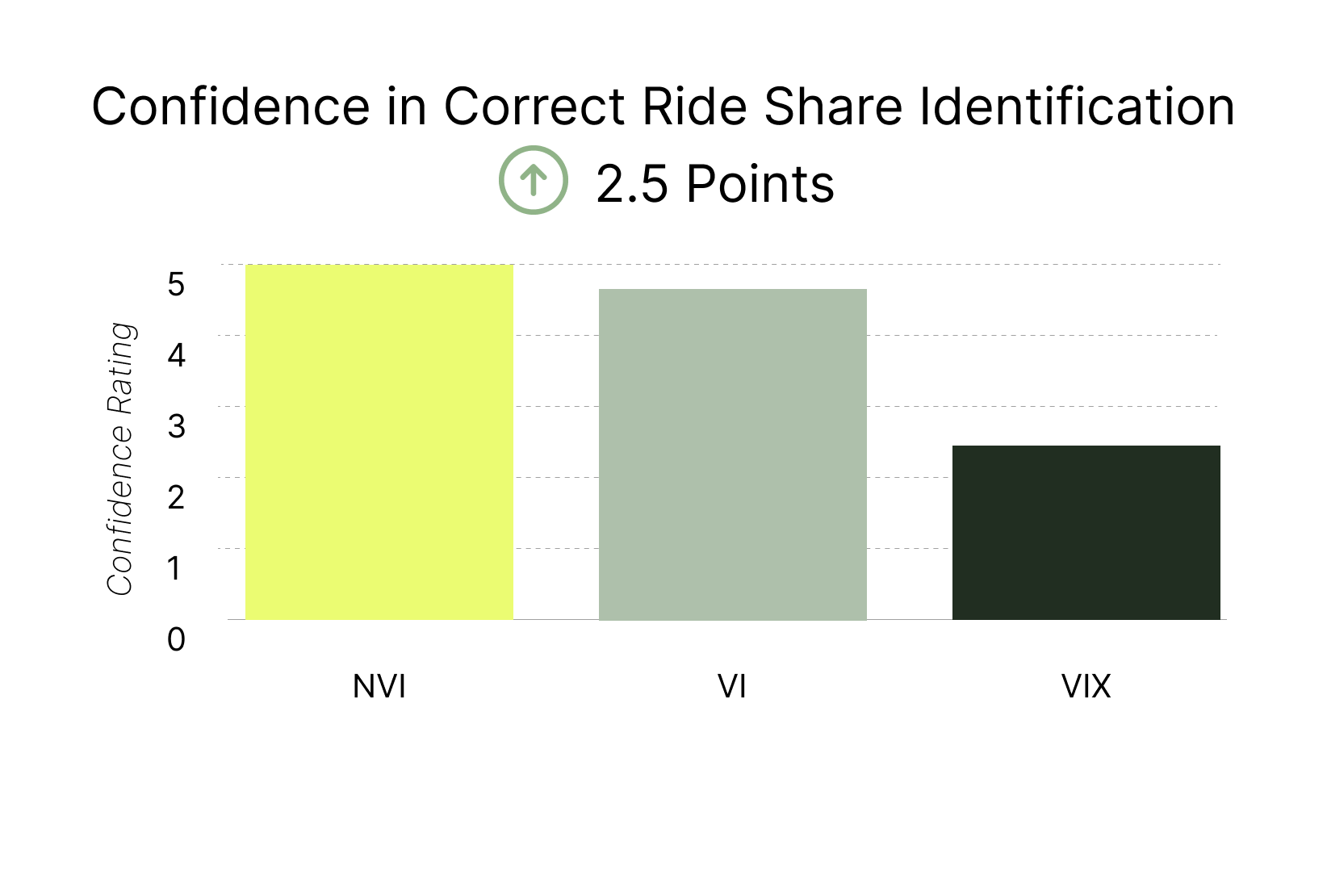
After the testing, participants received a 5 point likert-scale survey to measure confidence, satisfaction, and usability across key moments of the ride.
FIndings
H1 Supported
audio feedback significantly improved confidence in ride identification, route navigation, and exit direction. H2 Supported
H2 Supported
visually impaired participants using multimodal feedback performed similarly to non-visually impaired participants.
H3 Supported
participants without audio feedback demonstrated consistently lower confidence across tasks.
In Conclusion:
This research demonstrates that multimodal interfaces can significantly improve accessibility and independence for visually impaired riders. Specifically, auditory feedback plays a critical role in building trust and navigation confidence.
Inclusive interface design will be essential to ensuring autonomous transportation benefits all users.