
Improving Autonomous Ridesharing Accessibility
A UX research study evaluating multimodal HMI feedback for visually impaired users.

Peer-reviewed and published in the Proceedings of the Human Factors and Ergonomics Society Annual Meeting
Focus
Designing accessible multimodal HMIs for visually impaired autonomous vehicle users.
Methods
Experimental usability study, literature review, moderated user testing.
My Role
UX Researcher responsible for study design, usability testing, and synthesizing findings to evaluate multimodal accessibility in autonomous vehicle HMIs.
Outcome
Findings contributed to a peer-reviewed publication and informed multimodal accessibility recommendations for autonomous ridesharing.
Jump to…
Problem
Accessibility
Autonomous rideshare interfaces rely heavily on visual interaction, creating accessibility barriers for visually impaired users.
Exclusion
These barriers limit users’ ability to confidently navigate rideshare experiences
Quality of life
This reduces independence that autonomous transportation could provide and they lose out on opportunities for socialization and employment.
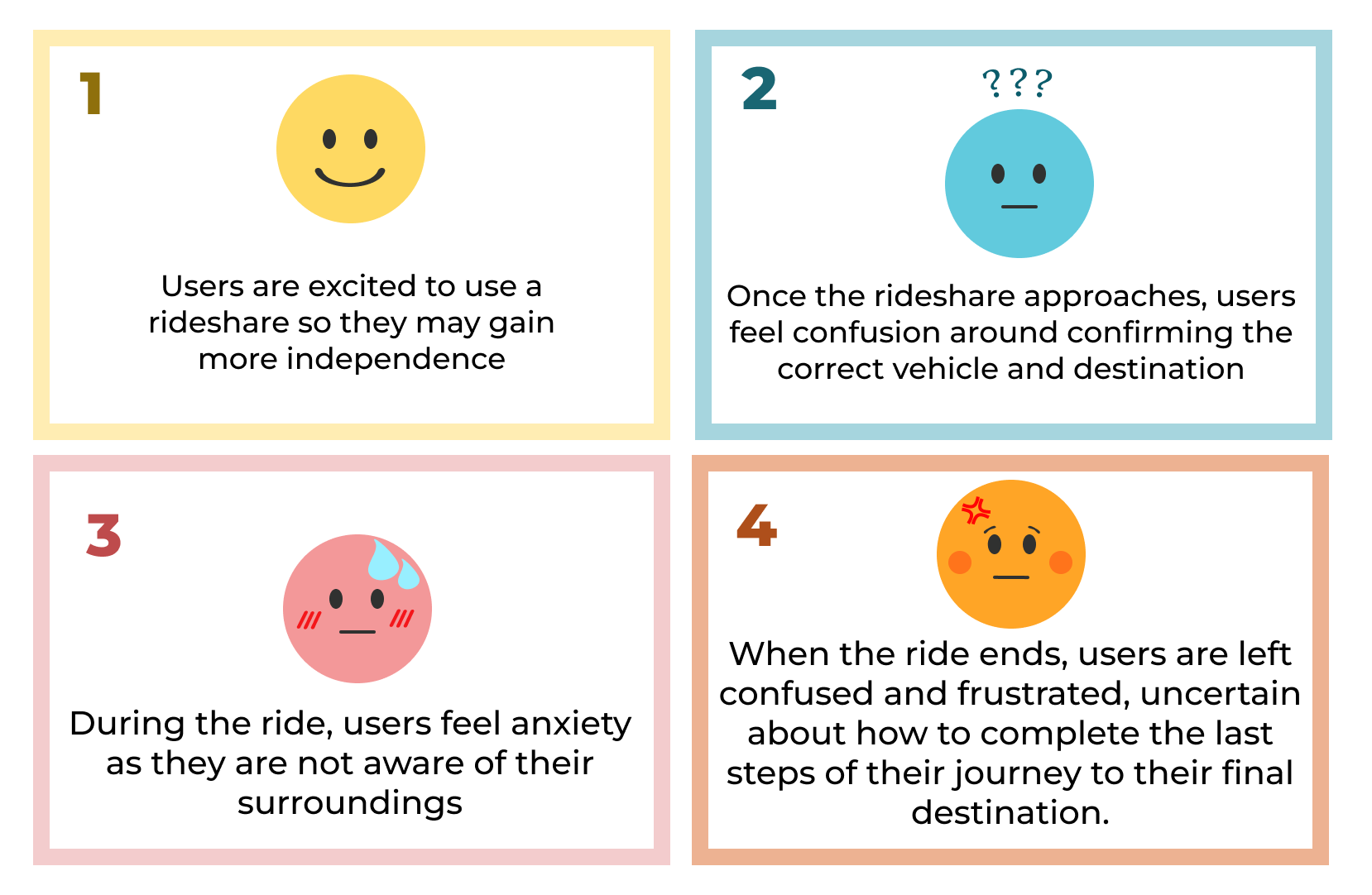
The Autonomous Rideshare Experience
Design Opportunity
How might we help visually impaired riders feel confident, oriented, and independent during autonomous rideshare experiences??
1 reSEARCH & PLANNING
Literature Review
Reviewed 27 academic papers to understand:
✓ accessibility barriers in AV systems
✓ user trust and confidence in AV systems
✓ effectiveness of assistive technologies
✓ opportunities for multimodal interaction

Painpoints Revealed
Lack of Trust
Many visually impaired users expressed skepticism toward autonomous vehicles due to past experiences with inaccessible technology. They worried AV systems may overlook accessibility needs.
Situational Awareness
Riders reported difficulty maintaining awareness during trips and wanted clearer route updates, environmental cues, and destination alerts.
COnfirmation Difficulty
A common challenge for visually impaired riders is confirming they are entering the correct vehicle and arriving at the correct destination.
safety concerns
Users expressed safety concerns around system failures, particularly how they would access help, understand vehicle behavior, and respond to system issues.
reliance on visuals
Many autonomous vehicle interfaces rely heavily on visual displays, creating accessibility barriers for visually impaired users. Research showed that visual warnings are often missed and visual-only feedback is insufficient for navigation and awareness.
Design Requirements
Reduce reliance on vision through multimodal audio feedback
Increase trip awareness with route progress and environmental cues
Support independent navigation through vehicle and destination confirmation
Improve safety and trust with clear emergency communication pathways
Accessibility Framework
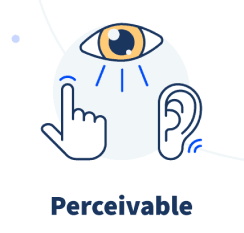
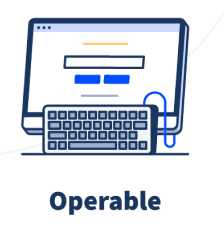
Design requirements were guided by WCAG’s POUR principles to ensure the interface remained perceivable, operable, understandable, and robust for visually impaired users.


2 Prototype Design
-
![]()
1. Interface Set Up
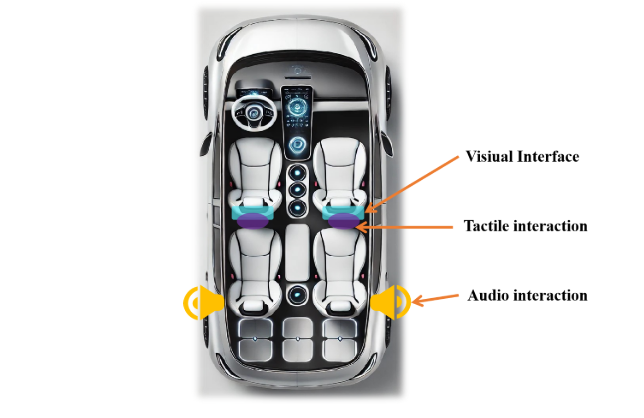
The prototype was designed to mirror a traditional rideshare experience, with the rider seated in the back seat. Visual interfaces and audio interactions were positioned in the back to ensure accessibility and support rider engagement.
-
![]()
2. Rider verification
To address concerns surrounding correctly identifying the assigned rideshare vehicle, the team designed a verification module that welcomes the rider and confirms they have entered the correct vehicle. This feature incorporates both visual and audio interactions to confirm trip details and provide reassurance to the rider.
-
![]()
3. Destination Confirmation
To address concerns about riders traveling to the correct destination, the team designed a destination confirmation module. This feature also incorporates both visual and audio interactions.
-
![]()
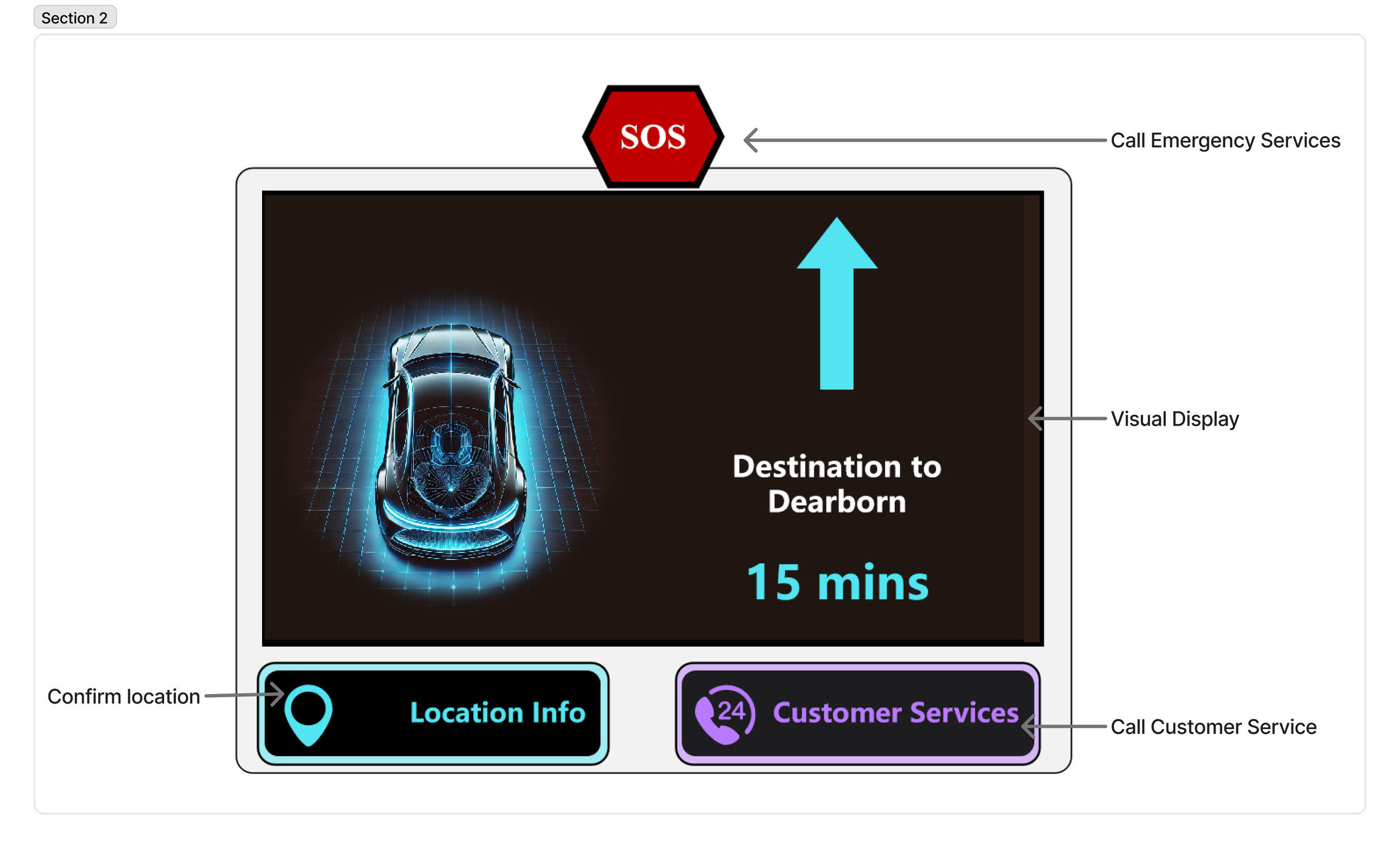
4. Default Screen
The default screen paired visual and tactile features to support rider safety and accessibility. The interface displayed important ride information using WCAG-compliant contrasting colors, alongside physical buttons riders could press during emergencies or when immediate assistance was needed. This design aimed to reduce uncertainty and provide reassurance in emergency situations.
-
![]()
5. Event: traffic light
When approaching a traffic light, the system keeps riders informed of the situation, this is designed to help them maintain situational awareness throughout the ride and feel more confident in the vehicle’s actions.
-
![]()
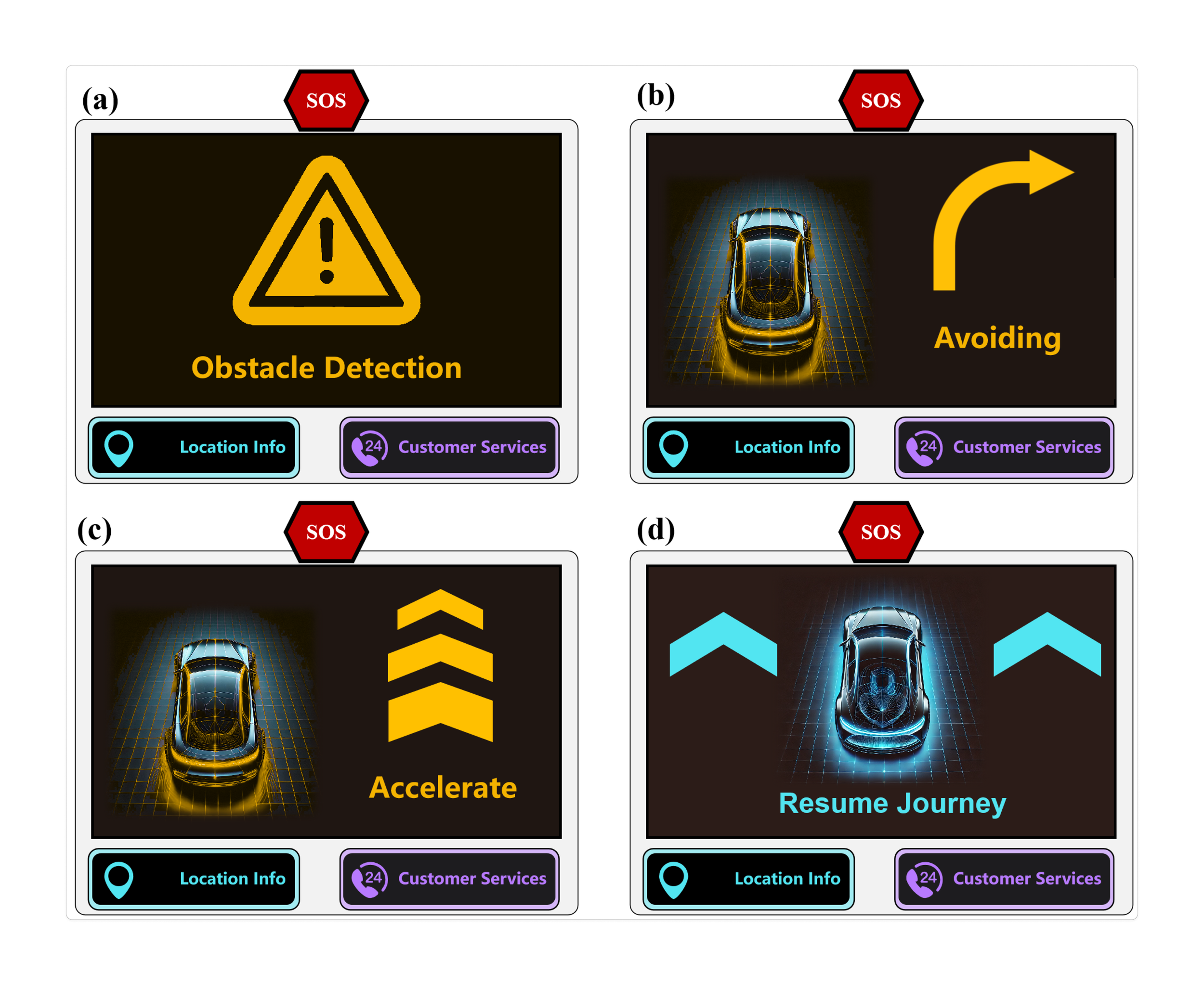
6. Event: Obstacle Detection & Avoidance
When the vehicle encounters an obstacle and changes routes, the system keeps riders informed to maintain situational awareness and confidence throughout the ride.



3 teSTING & Results
Hypothesis
Based on prior literature, we hypothesized that multimodal feedback would improve confidence, usability, and accessibility outcomes.
Audio feedback improves navigation confidence and route awareness for visually impaired riders.
h1
Multimodal feedback enables visually impaired users to perform comparably to non-visually impaired riders.
h2
Removing audio feedback decreases rider trust and situational awareness.
h3
Testing
Study Design
Between-subjects experimental study
24 participants across 3 conditions to reduce learning effects.
Participant Groups
NVI: No visual impairment + audio cues
VI: Simulated visual impairment + audio cues
VIX: Simulated visual impairment + no audio cues
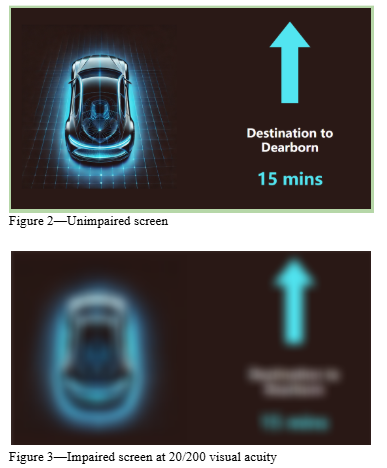
Impairment was simulated by Cambridge Disability Simulator which was used to simulated visual impairment at 20/200 acuity blur
experiment
Participants completed a simulated rideshare experience and were asked to:
1.identify the correct vehicle
2.navigate route progression
3.exit and orient themselves
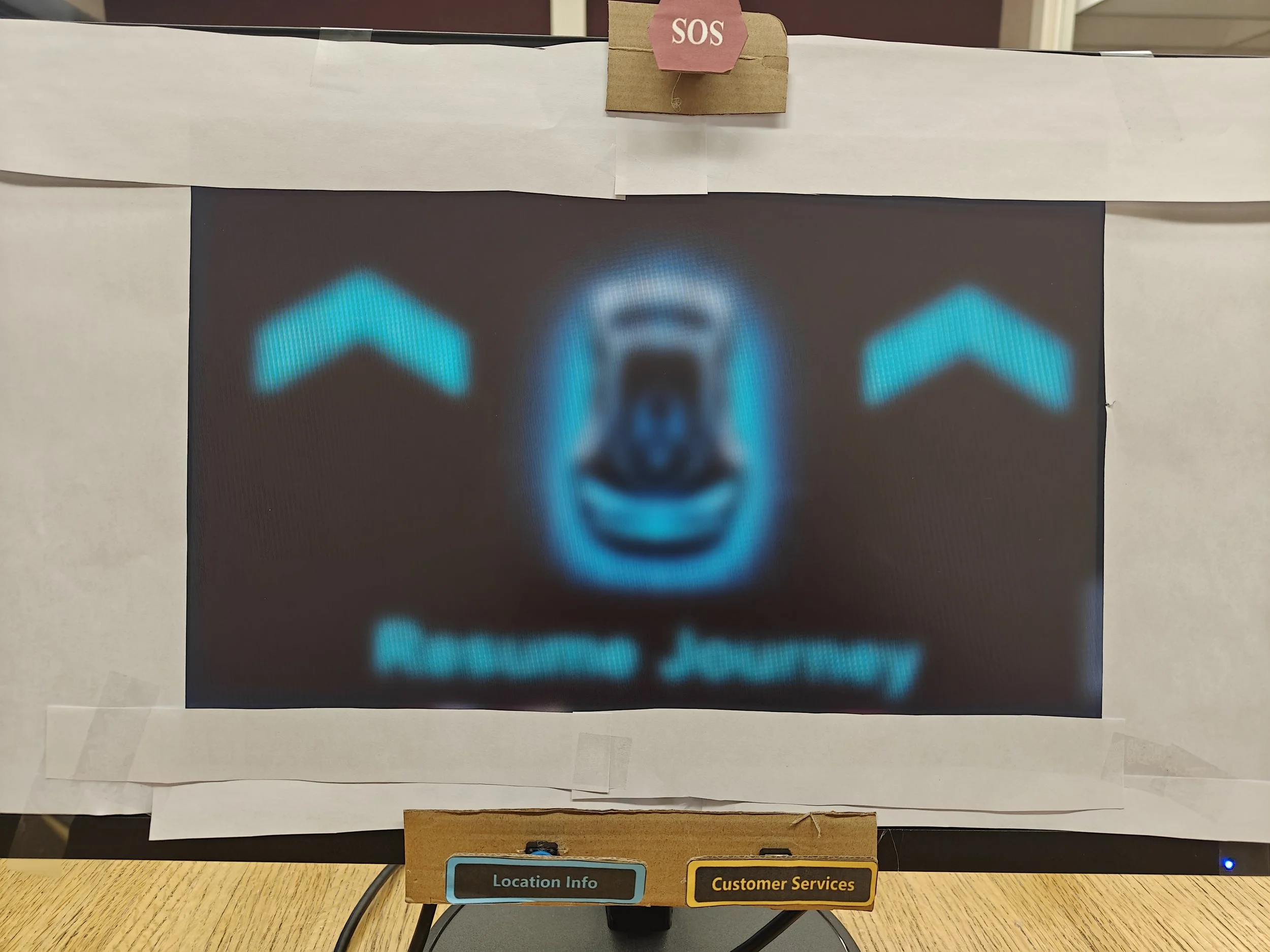
Wizard-of-Oz simulation used for usability testing, replicating the rear-seat AV environment with synchronized audio and visual output.
measuing usability
After the testing, participants completed a 5-point Likert scale measuring:
1. confidence
2. satisfaction
3. usability
Statistical analysis was conducted using the Kruskal–Wallis test with post-hoc testing to identify significant differences between groups.
Findings
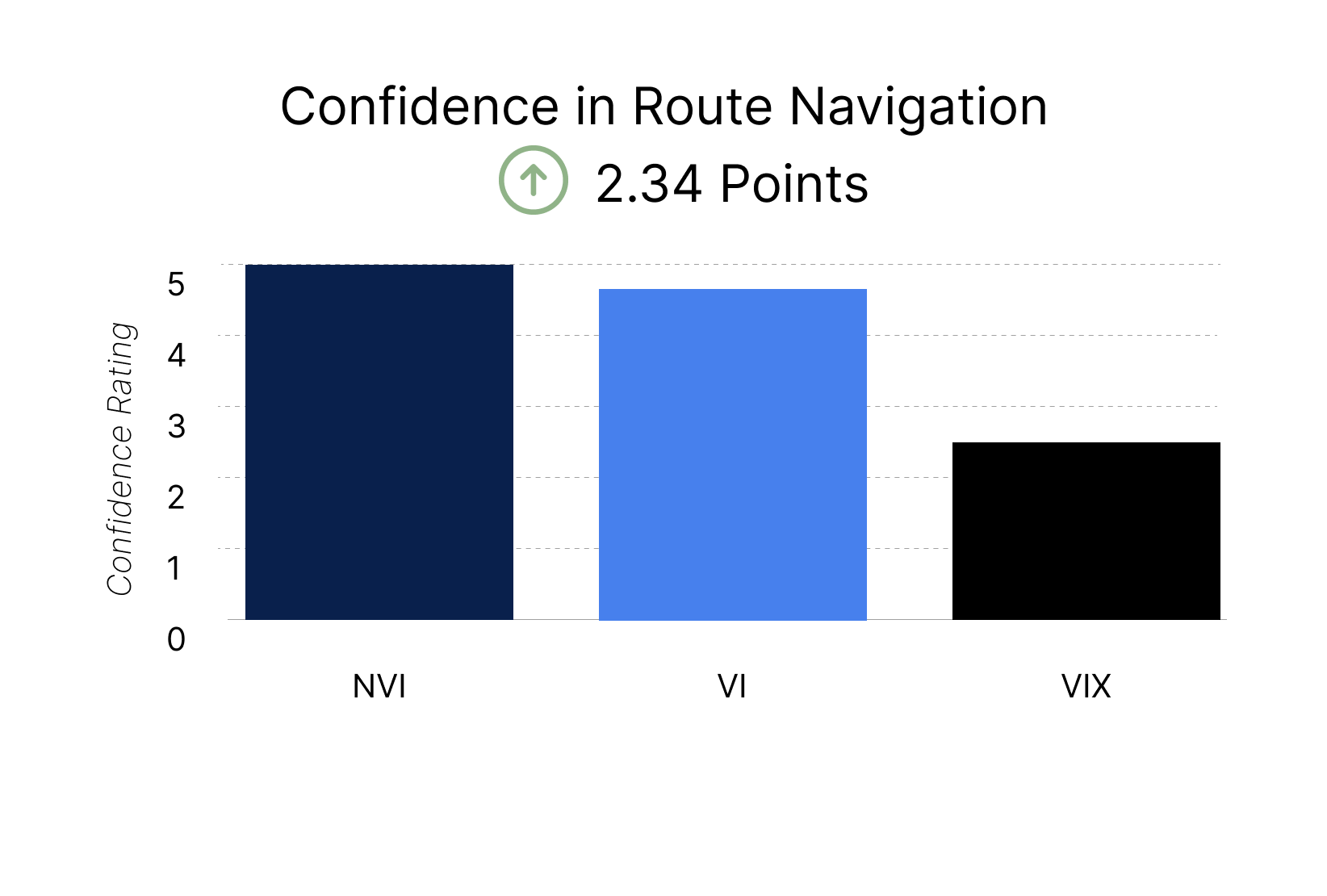
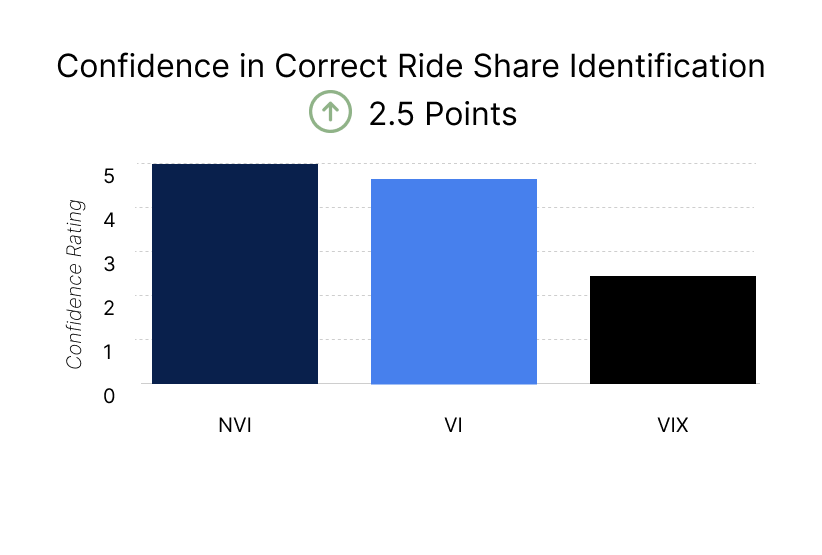
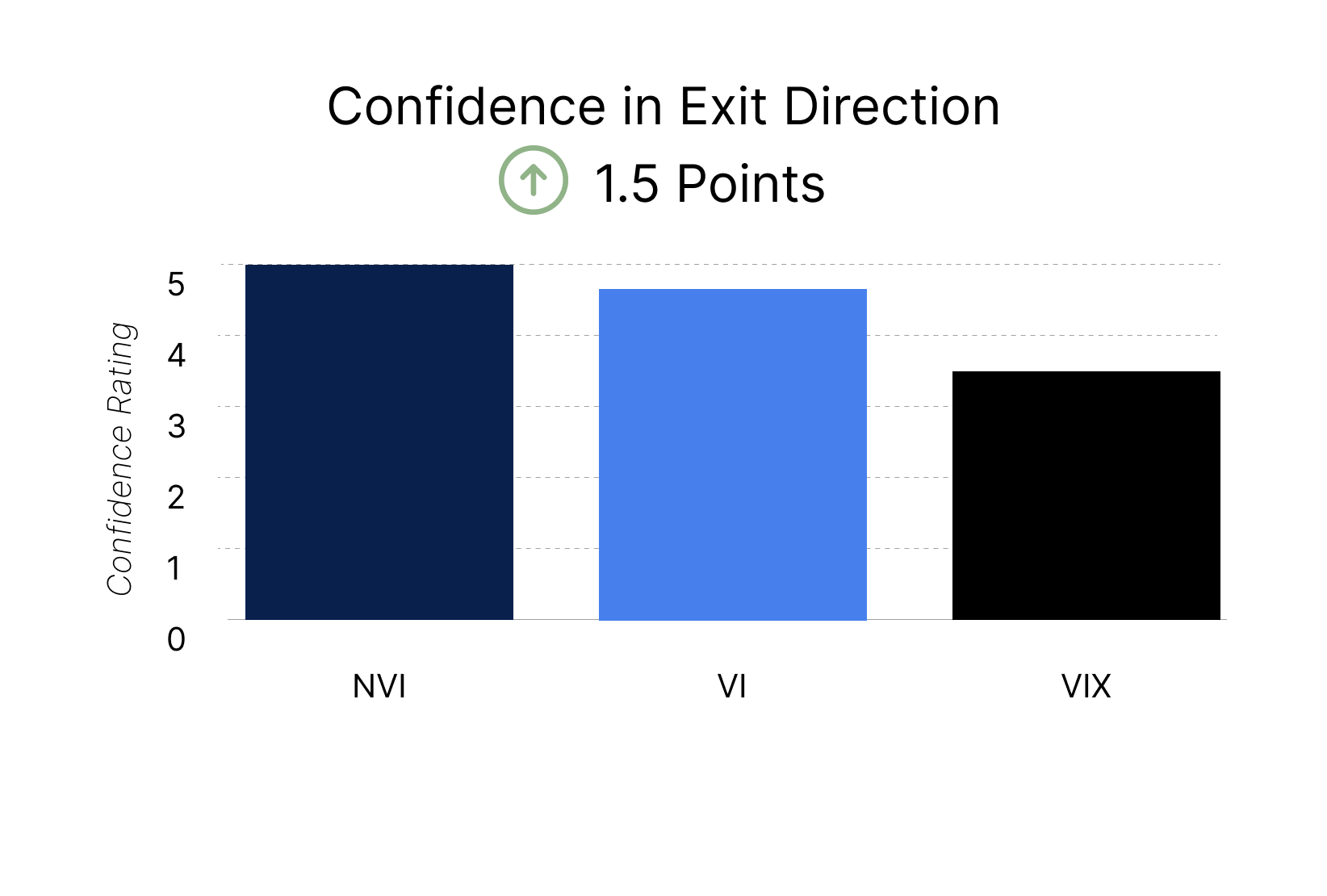
Key finding: visually impaired participants using multimodal feedback performed comparably to non-visually impaired riders
Across key rideshare tasks, including vehicle identification, route navigation, and exit orientation; the VI group preformed comparably to the NVI group. These findings suggest that multimodal feedback can meaningfully improve confidence, situational awareness, and usability for visually impaired autonomous rideshare users, reinforcing the importance of accessibility-centered HMI design in reducing barriers to independent travel.

h1
h2
h3
4 conclusion
Key Takeaway: multimodal interfaces can significantly improve accessibility and independence
This research challenged my assumptions about what makes an interface intuitive. I learned that relying primarily on visual interaction can unintentionally exclude users, particularly in high-stakes environments like autonomous mobility. As a designer, this project strengthened my belief that inclusive systems should prioritize multimodal feedback, clear communication, and trust-building throughout the user experience.
Future Design Opportunities:
Introduce haptic feedback
Explore seat vibration and localized speakers to create tri-modal feedback and improve accessibility for users with combined sensory impairments.Support personalized experiences
Allow riders to customize audio verbosity, tone, pacing, and cue frequency to better support individual comfort and anxiety levels.Expand multimodal testing
Evaluate how audio feedback impacts both visually impaired and sighted users to better understand broader usability benefits.