Designing behaviorally informed interventions for healthier social media use
A capstone project exploring how adaptive interventions can reduce mindless scrolling without restricting autonomy.
Lead UX Designer (Research, Interaction Design, Usability Testing)
Role
Behavioral Research, Interaction Design, Usability Testing
TImeline
Methods
Outcome
6 months
Validated with psychology experts and strong usability outcomes.
Jump to…
1 Understanding the problem
Problem Framing
Brain rot, named Scientific American’s word of the year, describes the mental fatigue caused by overconsumption of low-value digital content, especially online media (Scientific American, 2024).
For many users, social media begins with intention but quickly turns into passive consumption. A few minutes of scrolling becomes hours, often leaving users feeling mentally drained rather than fulfilled.
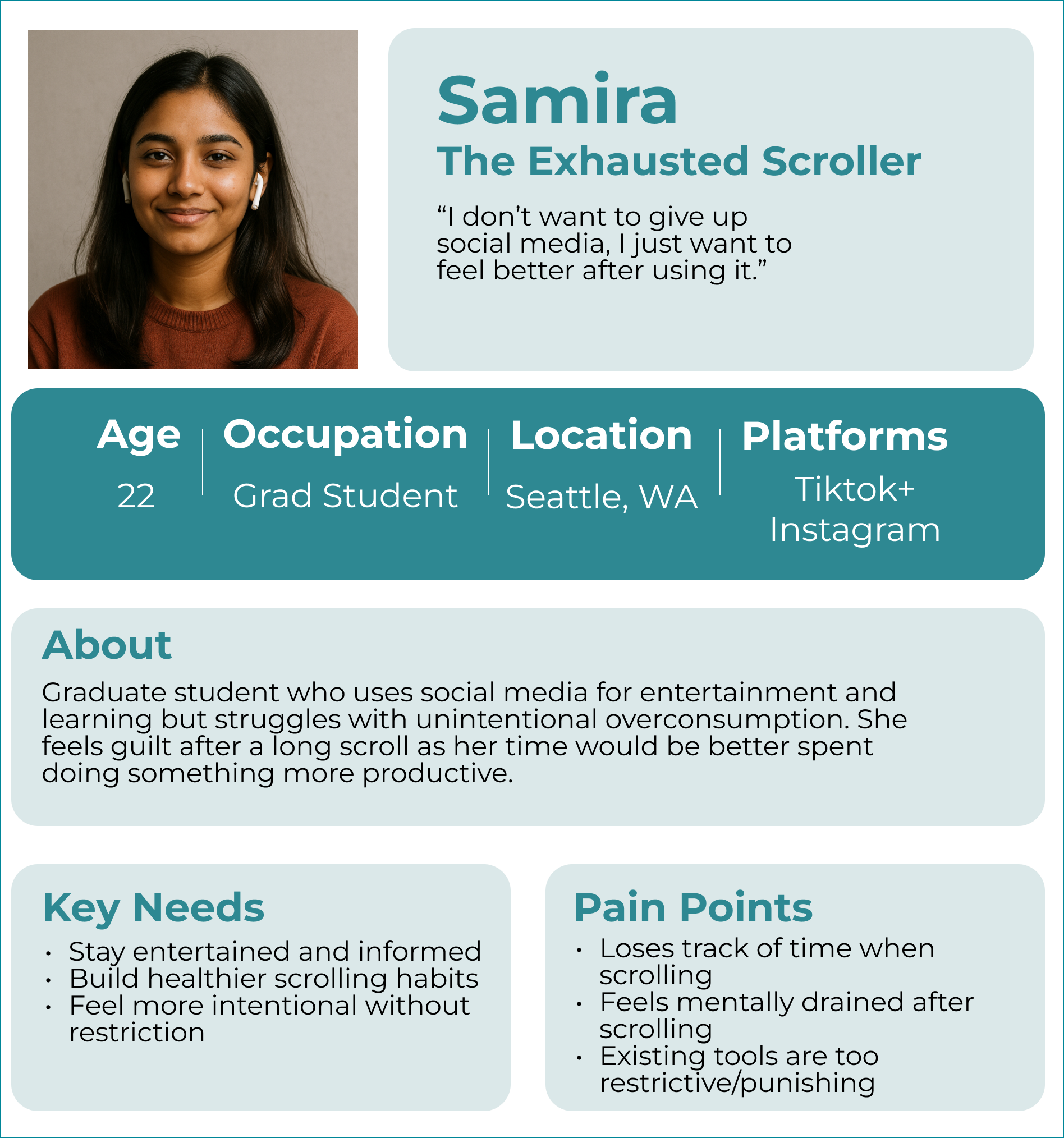
Meet Samira. She opens TikTok at 10:00 AM for a quick break. Without realizing it, it’s suddenly 1:00 PM. Her coffee is cold, her morning is gone, and the content she consumed feels meaningless. Yet, like many users, Samira doesn’t want to quit social media, she wants a healthier way to engage with it.
Research Methods
We created Samira after listening to many users’ stories about their social media use through….
Method
Goal
Interviews
Understand habits + motivations
Focus Groups
Explore shared behaviors
Literature Review
Identify evidence-based interventions
Key Findings
Scrolling is emotional regulation.
1
Users experience guilt after overuse.
2
Hard restrictions feel punitive.
3
Users still want to consume entertainment and learning focused content.
4
Design Opportunity
Users didn’t want to stop using social media, they wanted to use it more intentionally. Existing solutions often felt restrictive or difficult to sustain.
We saw an opportunity to encourage healthier engagement without sacrificing entertainment, learning, or connection.
How might we support lasting behavior change without removing what users value most?
2 Designing an intervention
Changing behavior is difficult, especially in digital environments designed to maximize attention. Rather than restrict social media use, we explored how behavioral design could encourage more intentional engagement over time.
Rethinking gamification
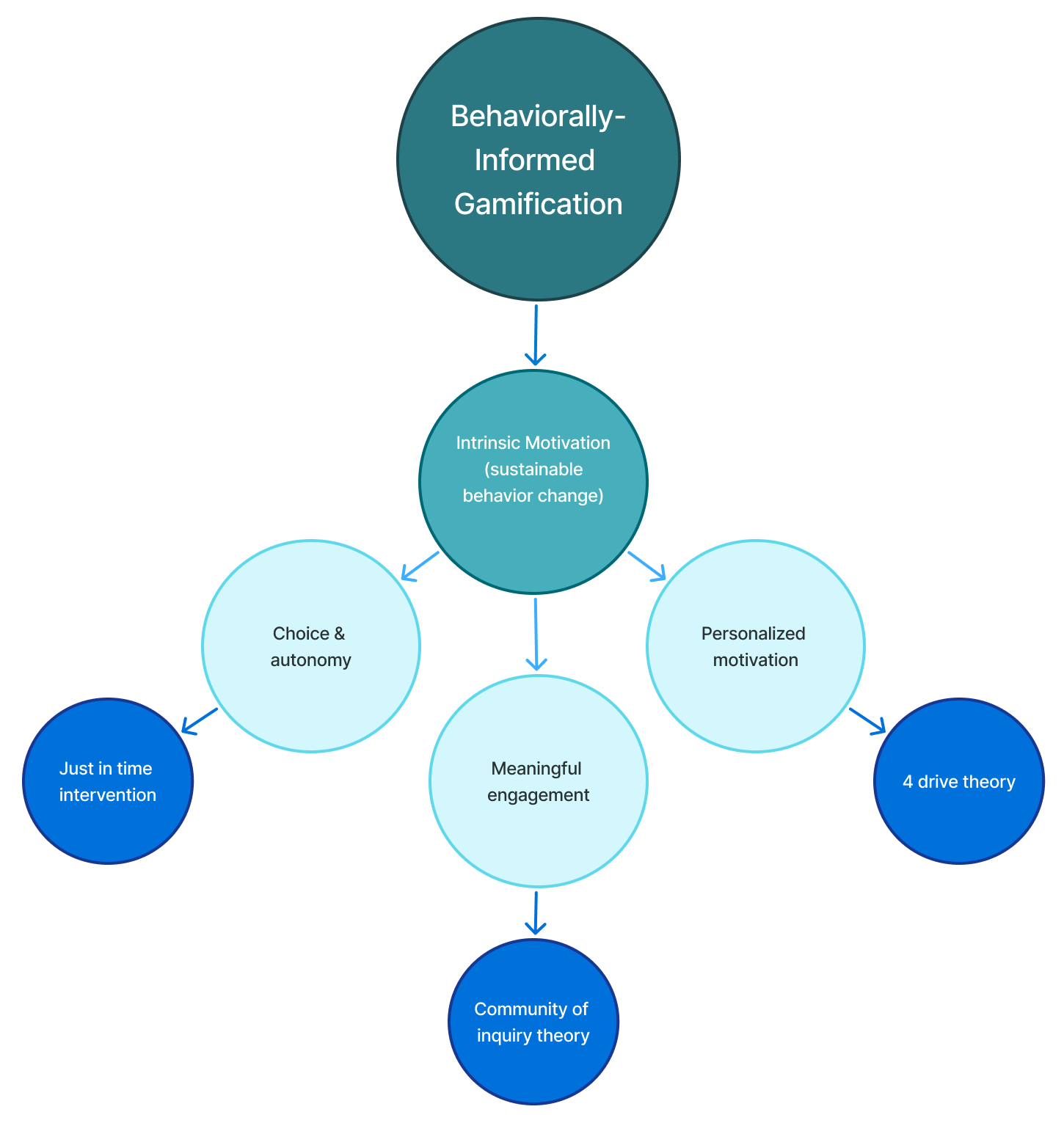
Our literature review revealed that while gamification can influence behavior, many systems rely heavily on extrinsic motivation (points, rewards, competition), often leading to short-term engagement.
Rather than replace traditional gamification, we explored how behavioral psychology could strengthen it by supporting intrinsic motivation and more sustainable behavior change.
JITA
Supports behavior change by meeting users in moments of need with lightweight interventions.
Community of inquiry
Emphasizes meaningful engagement through reflection, social connection, and guided learning.
4 Drive Theory
Suggests people are motivated by different psychological needs and respond to different forms of engagement.
Exploring Solutions
We generated dozens of concepts exploring how behavioral design could encourage healthier social media habits. To avoid designing for novelty alone, ideas were prioritized based on behavioral theory alignment, support for intrinsic motivation, and feasibility within TikTok.
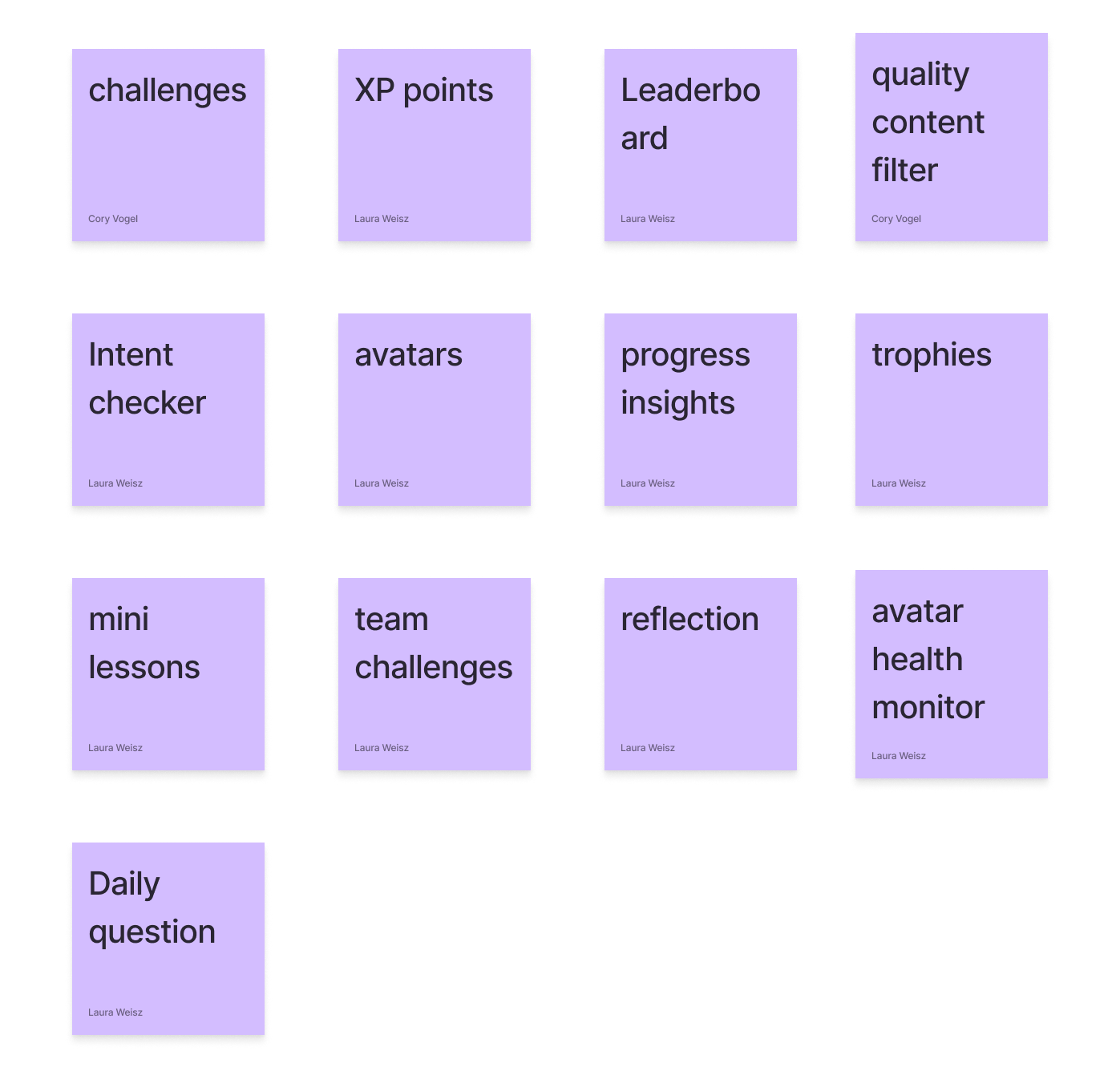
1. We explored interventions spanning reflection, rewards, learning, community, and personalization.
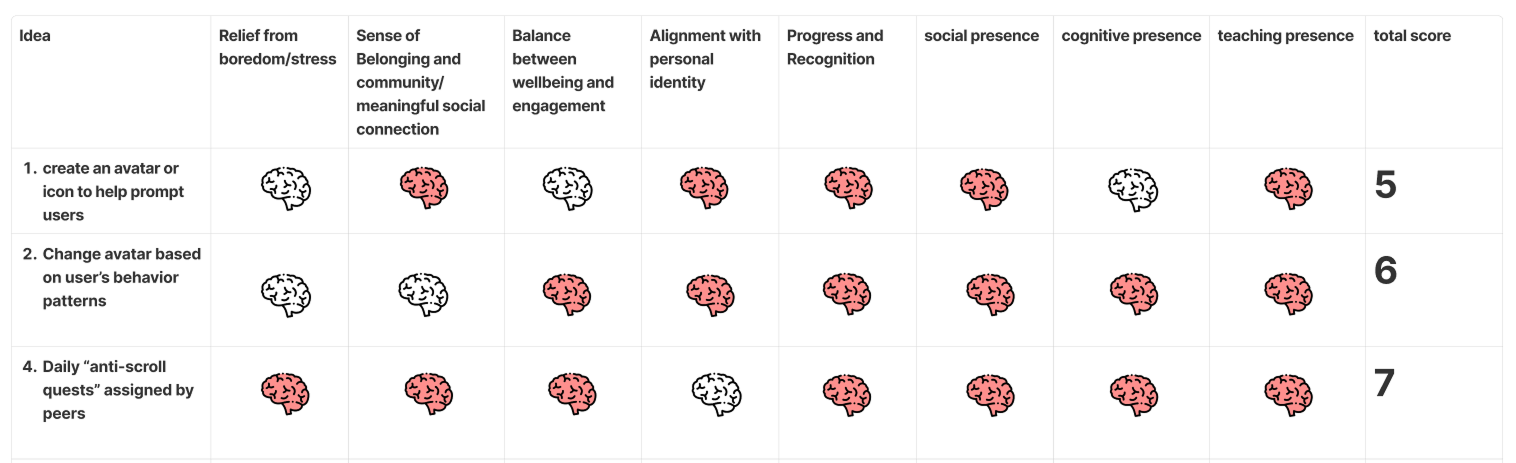
2.Concepts were scored out of 7 based on how well they aligned with our framework and user needs. Only ideas with a score of 5+ moved forward.
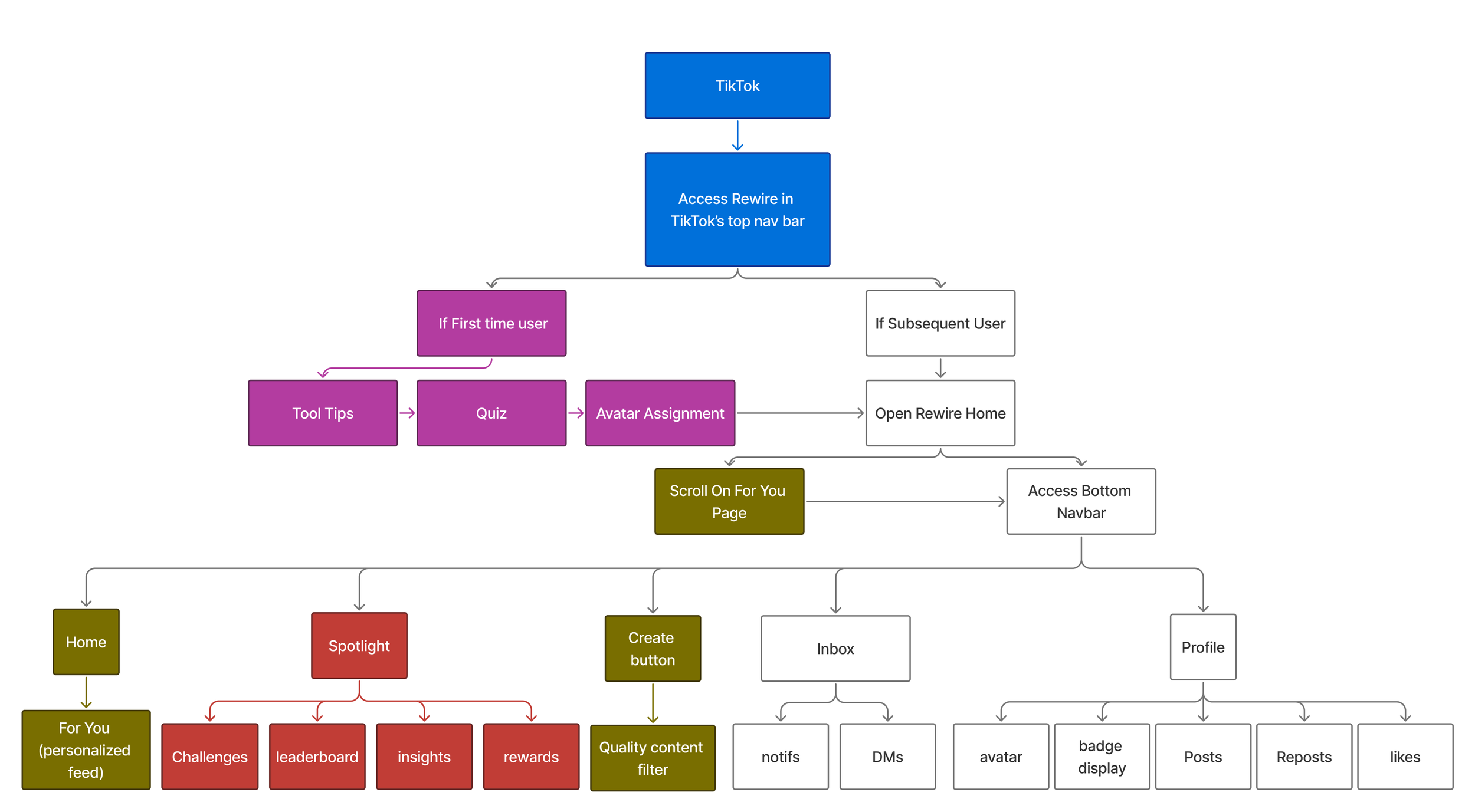
3.Selected features were translated into an information architecture
TikTok Extension
Insight: New platforms create friction.
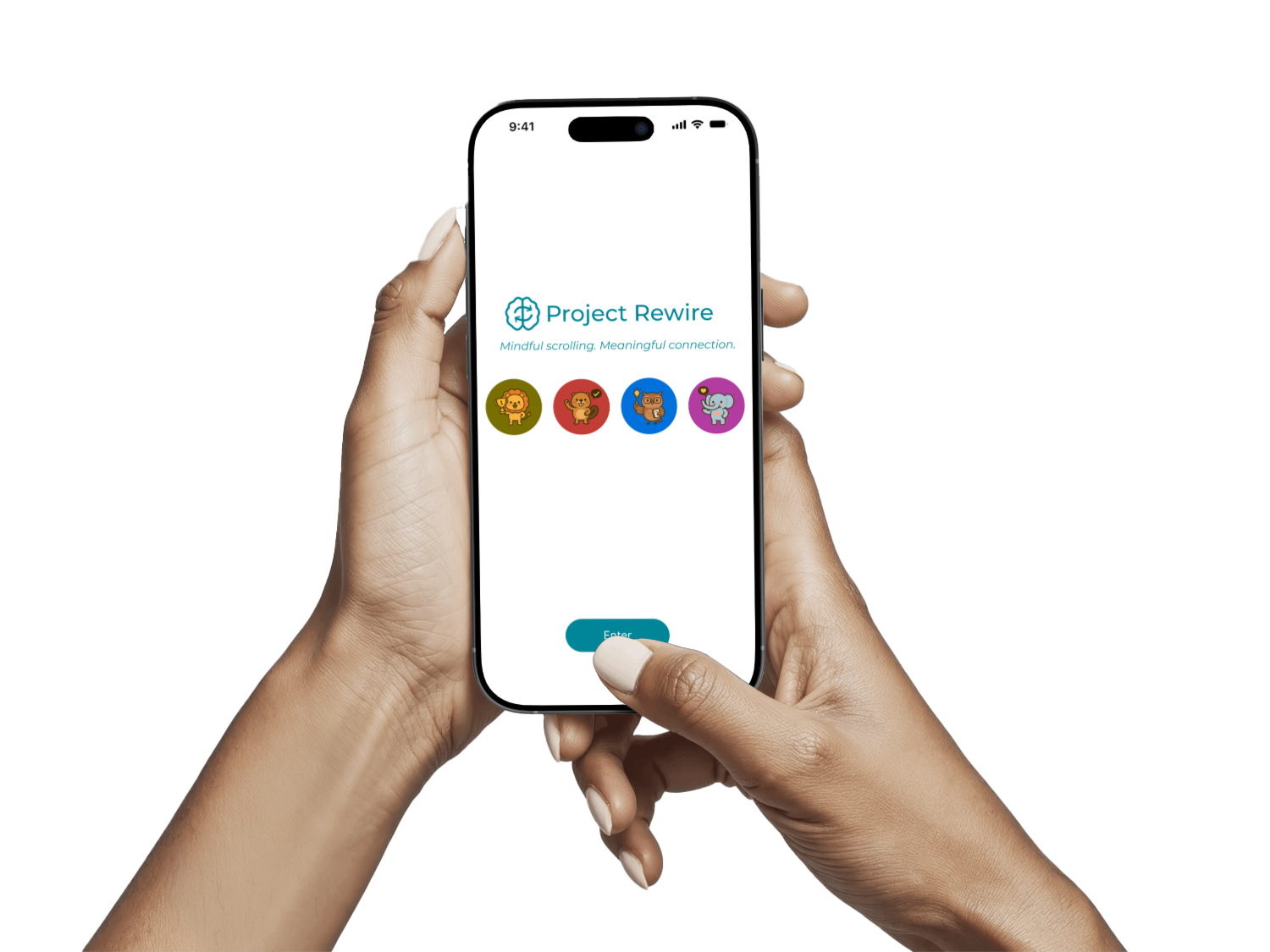
Decision: Embed Rewire within TikTok to support healthier scrolling habits.
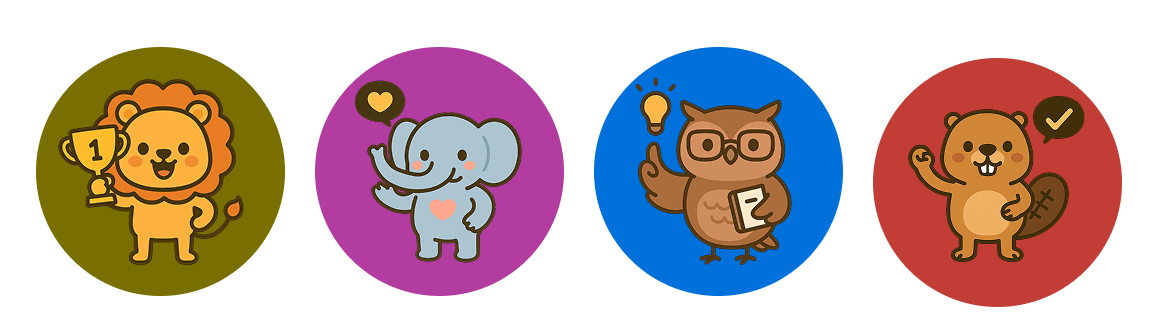
Personalized Avatars & Themes
Insight: Users are motivated differently.
Decision: Use customizable avatars and themes to support ownership and community.
Quality Content For You Page
Insight: Users valued content but felt unfulfilled after passive scrolling.
Decision: Surface educational, helpful, and reflective content screened at upload.
Spotlight Hub
Insight: Users lacked awareness of unhealthy scrolling habits.
Decision: Centralize challenges, rewards, reflection, and progress tracking.
3 Design, Test & Iterate
We translated prioritized concepts into interactive prototypes to evaluate usability, behavioral interventions, and content experiences within TikTok..
Testing Methods
Participants completed three untimed tasks completed onboarding, a challenge, and posting while thinking aloud to reveal friction points. A SUS survey followed testing.
Method
Protocol
Task-based usability testing
Expert Evaluation
Psychology experts reviewed the system for behavioral interventions and evaluated it for evidence-based alignment and ethical concerns.
From Feedback to Design Decisions
Usability testing and psychology expert feedback revealed opportunities to improve clarity, personalization, and engagement. These findings directly informed the final experience.
Usability & Increasing Engagement
Finding: Users became disengaged during longer flows and occasionally struggled to understand next steps.
Design Decision: Simplified task flows, reduced unnecessary steps, and prioritized tap-based interactions over text-heavy instructions.
Outcome: Reduced cognitive load and a more intuitive experience with clearer navigation.
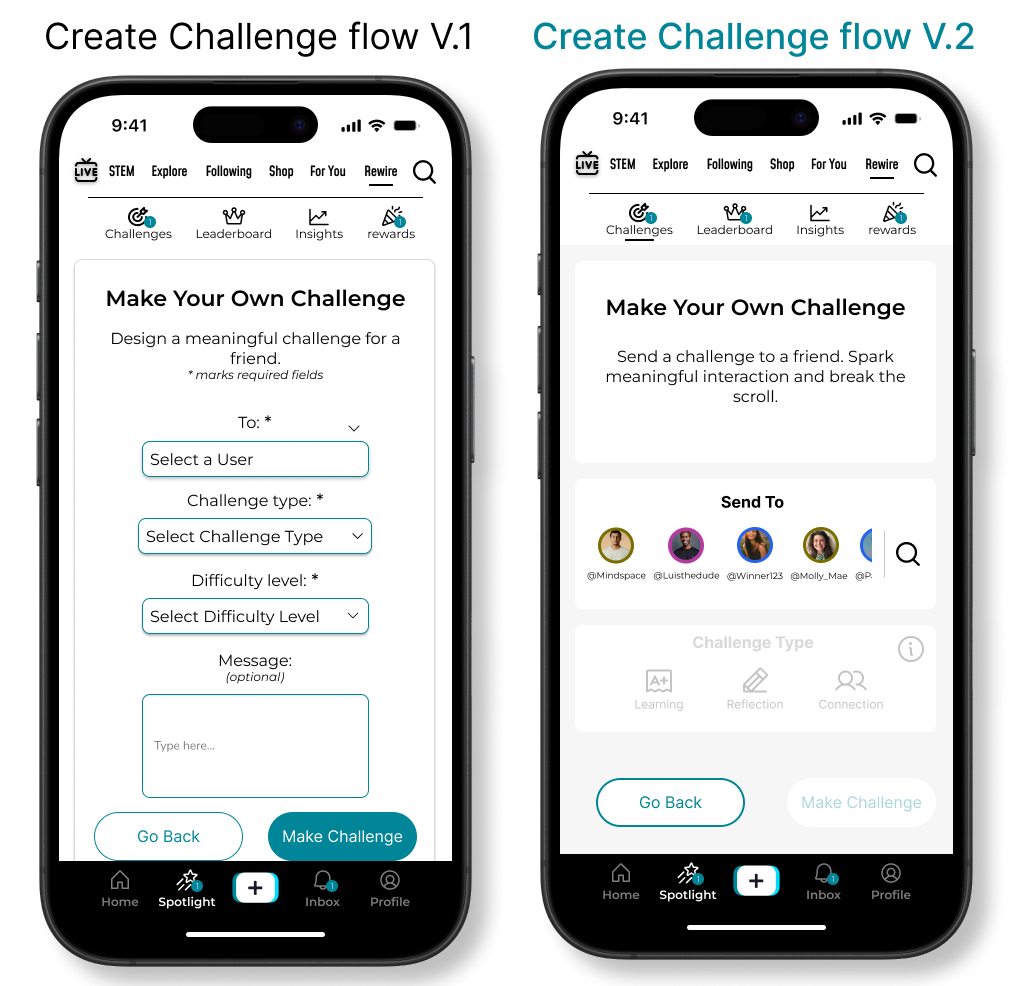
Clarifying Communication
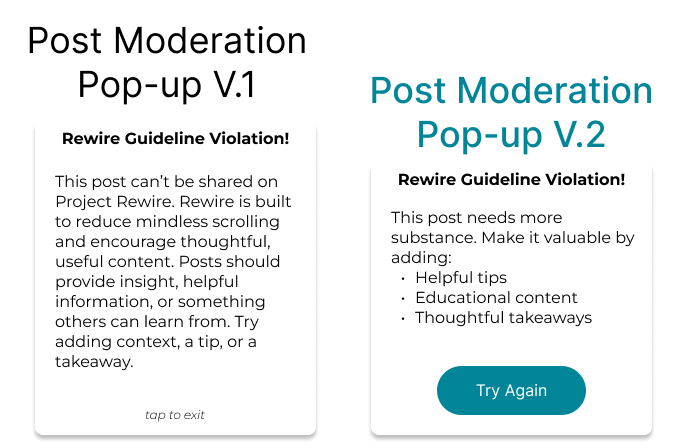
Finding: Participants found some messaging overwhelming or unclear, particularly around feedback and moderation.
Design Decision: Condensed microcopy and introduced clearer feedback throughout key interactions.
Outcome: Reduced cognitive load and a more intuitive experience with clearer navigation.
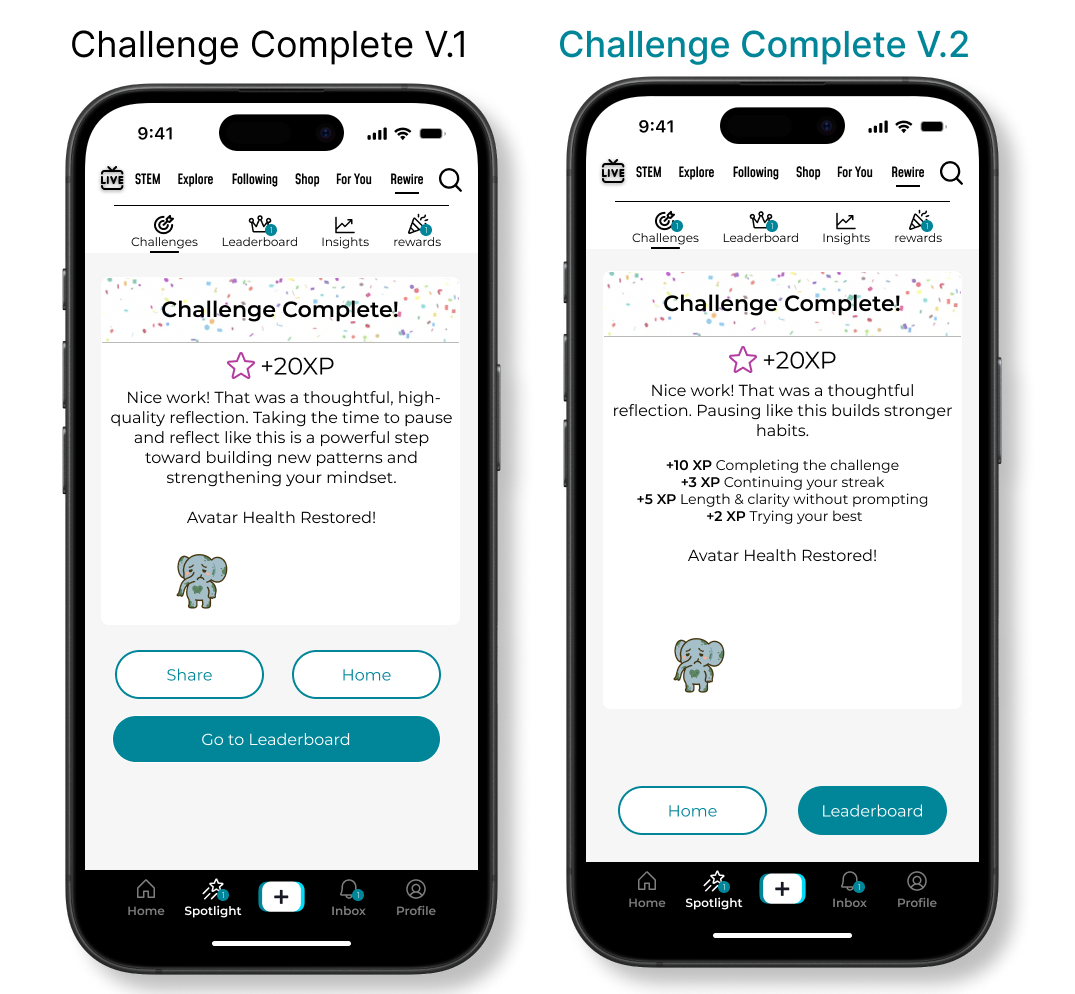
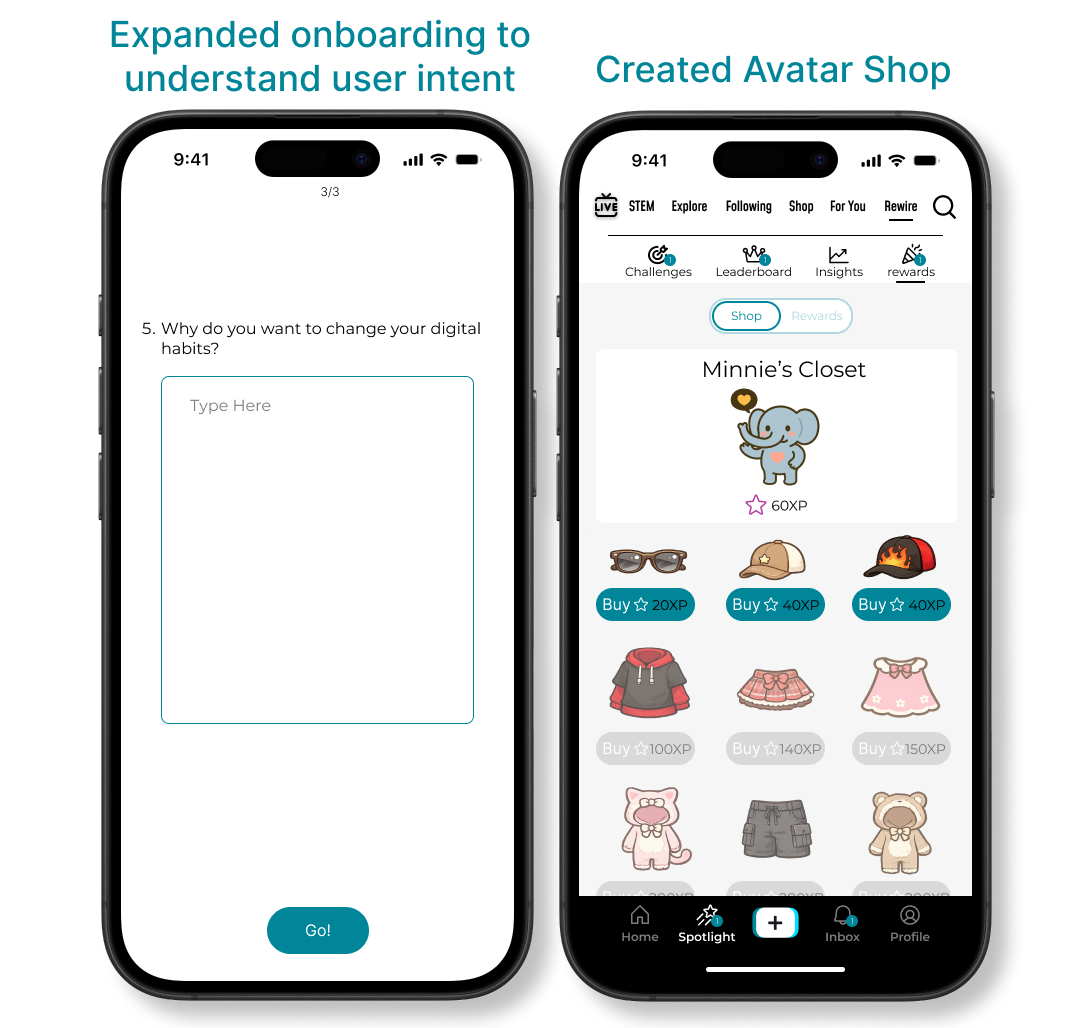
Adding more personalization
Finding: Usability testing and psychology expert feedback revealed that users wanted more personalization and stronger ownership over their experience.
Design Decision: Expanded onboarding questions and introduced an avatar shop to better align motivation with individual preferences.
Outcome: Increased ownership, motivation, and personal connection to the experience.
4 FInal Design
See how behavioral interventions, personalization, and reflection work together in the final product.
5 reflection
Project Rewire was the culmination of a year-long capstone project and one of the most rewarding experiences of my graduate program. Looking back, I'm proud of how the project evolved and how it challenged me to grow as both a designer and design thinker.
What I learned
Leading the design on this project taught me the importance of balancing flexibility with a clear design vision. Early on, we generated more ideas than we could realistically pursue, making it tempting to keep features simply because they were interesting. Over time, I learned that strong design is less about adding features and more about creating a cohesive experience where every decision supports the core opportunity.
Biggest Challenge
One of the biggest challenges was balancing innovation with familiarity. While Project Rewire introduced a new approach to behavioral gamification, testing revealed that users adapted more easily when interactions felt recognizable. By pairing a novel concept with familiar design patterns, we created an experience that was both approachable and engaging.
future directions
If I continued this project, I would focus on validating long-term behavior change through a longitudinal study. I would also explore more adaptive interventions, allowing content, motivation, and intervention timing to evolve alongside user habits. This would create a more personalized experience while providing deeper insight into the effectiveness of behavioral design over time.